
First-Time Homebuyer Guide to the Lakes Region, NH
Buying your first home can feel like learning a new language while making one of the largest purchases you have ever made.
Pre-approval. Escrow. Contingencies. Septic systems. Closing costs. Private roads.
And in New Hampshire’s Lakes Region, the house itself may only be part of what you need to understand.
The good news is that you do not need to know everything before you begin.
Quick Take
A first-time homebuyer in the Lakes Region usually has a few jobs to tackle first:
- Understand a comfortable monthly budget.
- Talk with a mortgage lender before seriously shopping.
- Learn what your loan options may require.
- Decide which property features are needs versus preferences.
- Look beyond the finishes and understand the home's major systems.
- Leave room in your budget for inspections, closing expenses, repairs, and homeownership costs.
- Ask plenty of questions before making an offer.
You can work through those pieces one at a time.

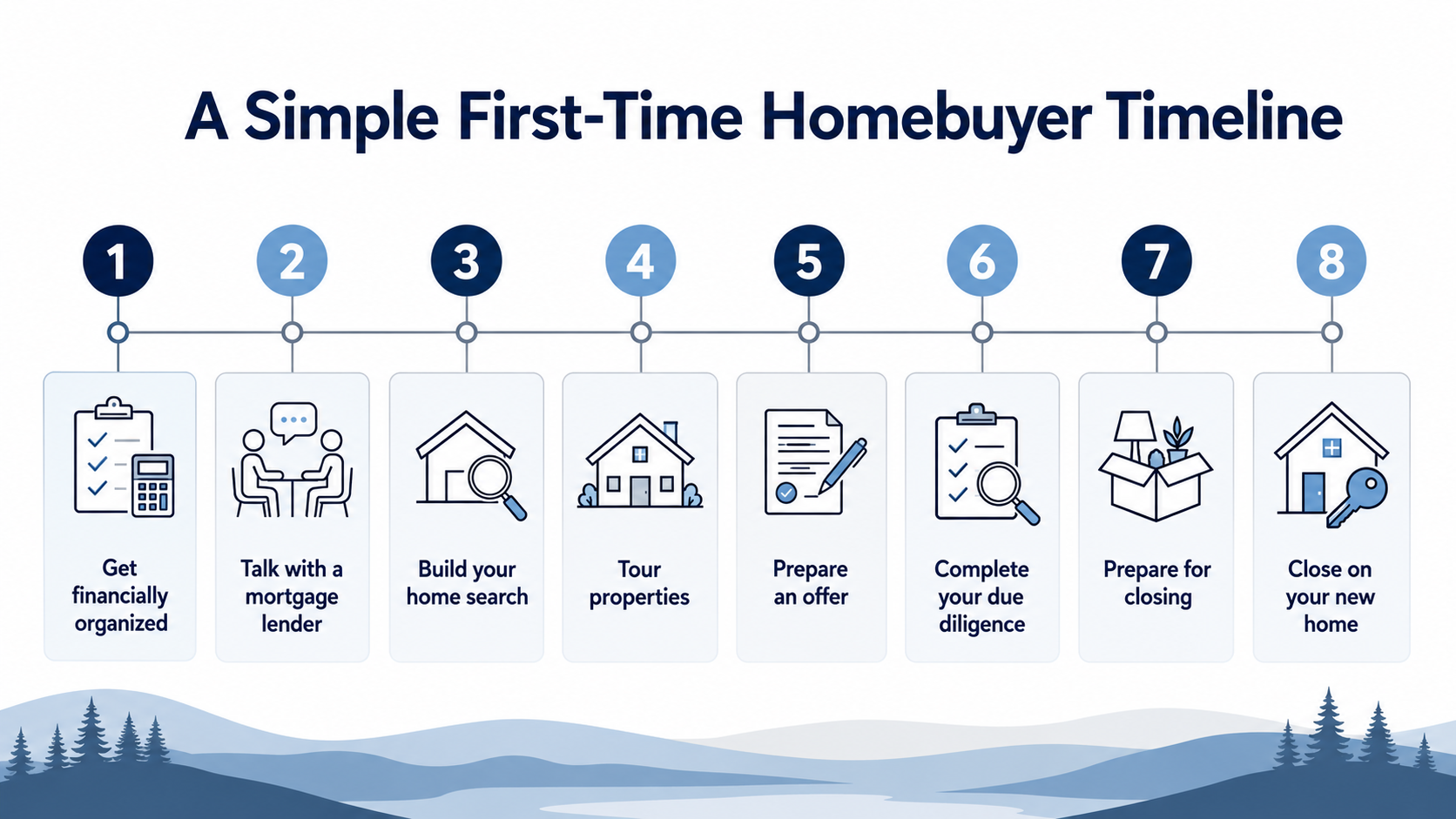
1. Get Financially Prepared Before you Start Shopping
It is tempting to start by scrolling through listings and choosing a price range.
A better first step is understanding what homeownership could realistically cost you each month.
Your housing expenses may include more than the principal and interest on your mortgage.
Depending on the property and your financing, you may also need to account for:
- Property taxes
- Homeowners insurance
- Mortgage insurance
- Heating and electricity
- Association or condominium fees
- Water or sewer expenses
- Well or septic maintenance
- Snow removal
- Routine maintenance and repairs
Instead of asking only, “How much can I qualify for?” consider asking:
“What monthly payment would still leave me enough room to save, handle repairs, and enjoy the rest of my life?”
A lender can help you understand what you may qualify to borrow. Your personal budget helps determine what you actually feel comfortable spending.
Do First-Time Buyers Need 20% Down?
Not necessarily.
There are several types of mortgage financing, and some allow qualified buyers to purchase with substantially less than a 20% down payment.
Depending on your situation, a lender may discuss conventional loans, FHA financing, USDA programs, New Hampshire Housing programs, or other options.
Loan requirements and assistance programs can change. A qualified mortgage lender can explain which options may apply to your income, credit, savings, and the type of property you want to purchase.
Questions to Ask a Lender
Before getting serious about a home, consider asking:
What purchase price fits the monthly payment I want?
How much cash should I expect to need before closing?
Which loan programs may fit my situation?
Would mortgage insurance apply?
What closing costs should I expect?
Are there down-payment or closing-cost assistance programs I should investigate?
Could the type or condition of a property affect my financing?
How long is my preapproval valid?
You do not need to become a mortgage specialist. You just need enough information to make your home search realistic.
2. Build Your Home Search Around Real Priorities
First-time buyers often begin with a long wish list.
Three bedrooms. Garage. Big yard. Updated kitchen. Short commute. Plenty of storage. No projects. Low taxes.
Then the available homes start showing you where the tradeoffs are. One simple way to organize your search is to divide features into three categories.
1. Needs
These are the things a home must have for it to work for you.
Examples might include:
Staying within a comfortable budget, certain number of bedrooms, enough parking, workable commute, a property type your financing can support
2. Wants
These are important, but you might compromise for the right property.
Examples could include:
A garage, additional storage, a larger yard, a certain type of heating system.
2. Dreams
These are features you would enjoy but do not necessarily need. Maybe that is a renovated kitchen, finished basement, mountain view, or extra bedroom. Your priorities may change after you tour a few homes. That is normal.
Seeing properties in person often teaches you what matters more than any checklist can.
3. Know the Local Property Questions to Ask
Lakes Region Considerations
What Should You Ask About the Property?
Lakes Region homes can come with features you may not have owned before. Select a topic below to see a few useful questions to ask.
Private Well Water source & testing
Questions worth asking:
- What type of well serves the property?
- Is any recent water-quality information available?
- What water testing should I consider?
- Is anything known about the well's age or performance?
Who may help?
A qualified water-testing professional, well professional, home inspector, or other appropriate specialist.
Septic System Condition & maintenance
Questions worth asking:
- What type of septic system serves the home?
- Is information available about its age or maintenance history?
- When was it last serviced, if known?
- What inspection or evaluation should I consider?
Who may help?
A qualified septic professional can evaluate the system and answer technical questions.
Private or Shared Road Maintenance & winter access
Questions worth asking:
- Who plows the road in winter?
- Who is responsible for routine maintenance?
- How are repair expenses divided?
- Is there a written road-maintenance agreement?
Who may help?
A real estate attorney can help you understand agreements, rights, and legal obligations.
Heating System Fuel, condition & maintenance
Questions worth asking:
- What heats the home and domestic hot water?
- How old is the heating equipment, if known?
- What maintenance information is available?
- Are there multiple heating sources?
Who may help?
A licensed home inspector or qualified heating professional can provide information within their scope.
Waterfront or Water Access Rights, rules & restrictions
Questions worth asking:
- What water rights actually transfer with the property?
- Is the access private, shared, or association-owned?
- Are there easements or association rules to review?
- Are there restrictions involving docks, beaches, or shoreline use?
Who may help?
Depending on the question, a real estate attorney, municipal official, or appropriate state agency may need to provide guidance.
Association or Shared Features Fees, rules & responsibilities
Questions worth asking:
- What fees or assessments apply?
- What does the association maintain?
- What rules or restrictions should I review?
- Are there shared roads, recreation areas, utilities, or other features?
Who may help?
Review the available association documents and ask a real estate attorney about legal questions.
Good to Know:
None of these features automatically makes a property a good or bad choice.
They simply give you more information to investigate before making a decision.
4. Understand the Offer Before You Make One
Finding a house you like is exciting.
But an offer involves more than deciding how much you are willing to pay.
Depending on the situation, an offer may address:
- Purchase price
- Earnest money
- Financing
- Inspection terms
- Closing date
- Included items
- Seller concessions
- Other contingencies or negotiated terms
- The strongest decision is not necessarily the most aggressive one.
It is the offer you understand and are comfortable making based on the property, your financing, current market conditions, and your own priorities.

Myth vs. Reality
Myth: The highest offer always wins.
Reality: A seller may look at the entire offer. Price matters, but financing, timing, contingencies, requested concessions, and other terms can also affect a seller's decision.
That does not mean you should automatically remove protections to make an offer appear stronger.
Ask what each part of the offer means before deciding what risks you are comfortable taking.
5. Use the Inspection Period to Learn About the Home
A home inspection is not simply a pass-or-fail test.
It is a chance to learn more about the property you are considering buying.
Depending on the home and the terms of your agreement, you may want to consider a general home inspection as well as other evaluations or testing related to things such as:
- Septic systems
- Water quality
- Radon
- Chimneys
- Pests
- Structural concerns
- Other property-specific conditions
Which inspections make sense depends on the home.
Qualified inspectors and other specialists should provide technical opinions about systems within their professional scope.
If something comes up during an inspection, try asking:
- What exactly was found?
- How significant is it?
- Does it need immediate attention?
- Should another professional evaluate it?
- What could ownership or repair involve?
- Does this change how I feel about the property?
- What options do I have under the purchase agreement?
An inspection finding does not automatically tell you whether to buy a home.
It gives you information you can use to make a more informed decision.
6. Prepare for Costs Beyond the Down Payment
The down payment gets a lot of attention, but it is not the only money involved in buying a home.
Depending on your transaction, you may also need money for:
- Earnest money
- Inspections and testing
- Appraisal-related expenses
- Loan costs
- Attorney or title-related expenses
- Insurance
- Prepaid expenses or escrow funding
- Moving
- Immediate repairs or maintenance
Exact amounts vary widely.
Before making an offer, ask your lender and the other professionals involved what expenses you should expect and when the money may be due.
It is also wise to think beyond closing day.
Homes require maintenance. Something will eventually need repair, replacement, cleaning, servicing, or improvement.
Leaving some financial breathing room can make the transition into homeownership more comfortable.
- A Checklist for You! -
Common Questions About Buying Your First Home
Do I need 20% down to buy my first home?
Not necessarily. Several mortgage programs may allow qualified buyers to purchase with less than 20% down. A mortgage lender can explain current options and which programs may apply to your situation.
How much money should I have saved before buying?
There is no single number that works for everyone. Your cash needs depend on your purchase price, financing, down payment, closing expenses, inspections, deposits, and other costs. It can also be helpful to keep savings available for moving, maintenance, and unexpected expenses.
Should I get preapproved before looking at homes?
Speaking with a lender early can help you understand your estimated price range, monthly payment, and financing options before you become serious about making an offer.
Should I avoid a house with a well or septic system?
Not simply because it has one. The important thing is to understand what serves the property, obtain appropriate information or inspections, and learn about the maintenance responsibilities involved.
What if I do not understand something during the process?
Ask. Real estate comes with unfamiliar terminology, documents, systems, deadlines, and decisions. The professionals involved should be willing to explain the parts of the process within their roles.
 Copyright 2026 PrimeMLS. All rights reserved. This information is deemed reliable, but not guaranteed. The data relating to real estate displayed on
this Site comes in part from the IDX Program of PrimeMLS. The information
being provided is for consumers' personal, non-commercial use and may
not be used for any purpose other than to identify prospective properties
consumers may be interested in purchasing. Data last updated September 27, 2026 8:29 AM UTC
Copyright 2026 PrimeMLS. All rights reserved. This information is deemed reliable, but not guaranteed. The data relating to real estate displayed on
this Site comes in part from the IDX Program of PrimeMLS. The information
being provided is for consumers' personal, non-commercial use and may
not be used for any purpose other than to identify prospective properties
consumers may be interested in purchasing. Data last updated September 27, 2026 8:29 AM UTC
